Es befinden sich keine Produkte im Warenkorb.
Dezember 3
0 Kommentare
Du hast das Gefühl, dein Dienstleister könnte mehr leisten?

Dezember 3
0 Kommentare
Von Dennis Autermann
Dezember 3, 2025
In internationalen Entwicklungsprojekten – von der Biostudie bis zur Formulierung – entscheidet nicht nur Technologie über Erfolg oder Misserfolg. Ausschlaggebend ist, wie gut Teams mit unterschiedlichen Hintergründen zusammenarbeiten. Genau hier zeigt sich die kulturelle Intelligenz im Outsourcing als zentraler Erfolgsfaktor.
Chatterjee betont, dass indische Partner traditionell eine besondere Stärke mitbringen: eine Kultur des Respekts, der gegenseitigen Unterstützung und klarer Prioritäten. Projekte scheitern selten an fehlendem Know-how, sondern an Missverständnissen, Kommunikationslücken oder unberücksichtigten kulturellen Unterschieden. Erfolgreiche Outsourcing-Teams binden deshalb kulturelle Faktoren bewusst in ihre Arbeitsweise ein.
Wer mit Indien zusammenarbeitet, profitiert von einem Umfeld, das verlässliche Abläufe, Offenheit und kulturelles Verständnis strukturell verankert hat.
Indische Pharmaunternehmen sind geprägt von einer Kultur der Achtsamkeit, Verlässlichkeit und konsequenten Priorisierung, die zu einer bemerkenswert hohen Disziplin im Projektmanagement führt. Die über Jahrzehnte etablierte First-to-File-Mentalität hat Geschwindigkeit, Präzision und regulatorische Genauigkeit fest verankert. Für internationale Partner bedeutet das Teams, die zeitkritische Prozesse verstehen, strukturiert handeln und zuverlässig liefern.
Direkt in Teil 3 eintauchen – in nur 6 Minuten und 14 Sekunden:
Teil 3 beleuchtet, warum kulturelle Intelligenz der zentrale Erfolgsfaktor in internationalen Pharma Outsourcing-Projekten ist. Kuntal Chatterjee zeigt, dass Indiens Stärke nicht nur in Technologie oder Kosten liegt, sondern vor allem in einer ausgeprägten Deadline-Kultur, strukturiertem Projektmanagement und einer lösungsorientierten Mentalität.
Durch Respekt, gegenseitiges Verständnis und flexible Make-or-Buy-Strategien entstehen echte End-to-End-Partnerschaften. So wird aus einer klassischen Lieferantenbeziehung ein vertrauensbasiertes, leistungsfähiges Co-Creation-Modell.
Bernhard Gandolf (BG)
We’ve learned India turned from a workbench into a hub for innovation in terms of biomedicine and pharmaceuticals. In the projects I’m involved in, it is much about end-to-end partnerships instead of former client–supplier relationships. What’s your view on this, especially when looking at the relationship with Indian companies?
Kuntal Chatterjee (KC)
Sure. So, I think it’s all about relationship management and that’s one of the things we should really focus on today and later. This is one of my favorite topics, Bernard. When we are managing a project, it is not just managing a project — I always say it is managing the cultures. If we manage the culture well, if we respect each other, like a buyer and a seller, then it all comes down to understanding the pain points: What’s the problem, and how can we help you? How can we help you and make other people’s lives easier?
So, in this aspect, I think India was always there. Because if you see — I will give you two or three examples so that you understand — in India it is automatic that you do proper follow-up right from day one, even when you were in college, just not to miss anything. This culture of caring for each other and really getting the right things done, and setting priorities, is also imbibed by the family. This genetic makeup, as I say, is about getting things done in chaos. And if you take it in a higher spirit, in a positive way…
It is like navigating traffic on a busy road or a busy junction where it’s all chaotic, but people are still moving, the traffic is still flowing. And if you imagine that picture in the context of managing a complex generic-formulation operation — where a biostudy can fail, where things can go wrong, where your formulation may not be stable — everything in the world can go wrong, but still you have to deliver. The mindset has to be adapted. And I think in that respect India was able to attract that kind of, let’s say, trial, who came early on and who became the big entrepreneurs, like Dr. Reddy’s and all the other big giants we have.
Of course, I had the privilege of working in many Indian companies like Aurobindo, Dr. Reddy’s, and then Apotex, which also had a company in India. More or less, I saw that there was, as you said, a clear-cut deadline-based approach. That means, when I grew up, when I started my career, Bernard, we were measured by “first-to-file”. So why this example of first-to-file? As many of the viewers will understand, first-to-file means you have to be there on day one and get the stamp at the Baltimore office. I was actually a regulatory affairs manager myself at Dr. Reddy’s. I saw the whole life cycle of submitting the dossier with the US FDA and getting that stamp on the first letter which says that the first-to-file is actually submitted. Now, of course, there is a process — it has to be accepted and all that.
So this whole trajectory — the incentive for generics to be first-to-file, first wave of launch, and really helping the population by having a quality product in quality time and also getting the exclusivity — I think this has a lot to do with effective project management and truly deadline-based approaches.
And in our licensing field, I was very happy to see that there was a constant flow of the make-or-buy approach. “Make” is R&D, as we all know, and “buy” is in-licensing from others. But for both, for example with products like clopidogrel and various others, I have seen make and buy going in parallel. That means at one point in time they decided — depending on the biostudy or the stability — whether to continue with “make” or go for “buy”. This was a really great experience: we never say no to anyone; we can do it ourselves, but we also have alternatives so that we get that exclusivity and the first-day-to-launch advantage.
Of course, there are a lot of incentives, as we all know. Then came authorized generics, ANDA-1 and all these projects. But overall, generics had a clear-cut incentive, and that materialized with solid project management in place.
BG
So, if I paraphrase this correctly, first of all respecting and taking care of different cultures. Second, solid project management. And third, my takeaway is dealing with the open mind of Indians. You draw a picture of the chaotic traffic — although it works — and this can be used in projects.
Dann abonniere gleich unseren Kanal auf YouTube und du erfährst zuerst von neuen Beiträgen.
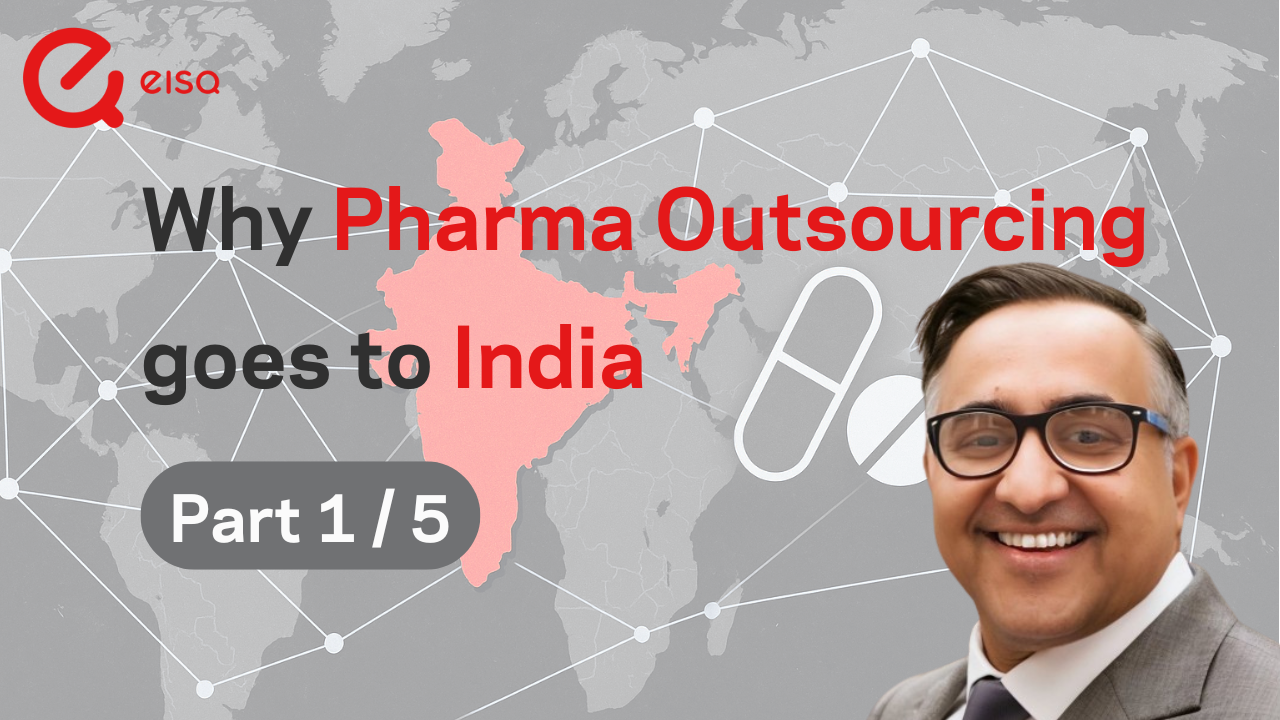
Teil 1, beleuchtet, warum Indien als „Apotheke der Welt“ gilt und wie das Land sich durch Skalierung, Ausbildung und strategisches Denken zu einem globalen Partner für Pharma Outsourcing und Lizenzmodelle entwickelt hat. Kuntal Chatterjee teilt Einblicke, was europäische Unternehmen aus Indiens Erfolg lernen können.

In Teil 2, unserer Gesprächsreihe „A Cup of Tea“ beleuchten Bernhard Gandolf und Kuntal Chatterjee die kulturellen, wissenschaftlichen und gesellschaftlichen Wurzeln von Indiens Erfolg im globalen Gesundheitswesen.
Der Beitrag zeigt, wie Spiritualität, Wissen und Technologie eine einzigartige Allianz bilden, die Innovation und Vertrauen fördert.
Indien erweist sich dabei als Melting Pot der Ideen – ein Land, in dem Vielfalt zur treibenden Kraft für Fortschritt wird.
Der wichtigste Erfolgsfaktor in globalen Pharma-Partnerschaften ist nicht Technologie – sondern Kultur.
Indien kombiniert:
eine einzigartige Fähigkeit, in komplexen Situationen funktionsfähig zu bleiben
ein tiefes Verständnis für Deadlines
eine flexible „Make-or-Buy“-Mentalität
und einen respektvollen, verbindlichen Umgang in der täglichen Zusammenarbeit
Für westliche Auftraggeber bedeutet das:
Wer kulturelle Intelligenz, offene Kommunikation und echtes Beziehungsmanagement ernst nimmt, schafft den Nährboden für Stabilität, Geschwindigkeit und Innovation – weit über klassische Lieferantenbeziehungen hinaus.
Erfahre, wie Unternehmen durch strategische Partnerwahl, klare Qualitätsstandards und gelebte Verantwortung ihre globale Pharma-Supply-Chain zukunftssicher gestalten von der Lizenzvergabe bis zur operativen Exzellenz.
Sprich uns unverbindlich und kostenfrei an – per Microsoft Teams oder direkt am Telefon unter +49 541 580543-0!
Wähle einfach den Termin, der dir am besten passt, und gib uns ein paar Stichworte zur Vorbereitung – den Rest übernehmen wir.
Mit unserer Erfahrung im internationalen Outsourcing und Qualitätsmanagement unterstützen wir dich praxisnah und effizient dabei, deine Partnerschaften mit Dienstleistern weltweit erfolgreich und zukunftsfähig aufzubauen.
Interesse geweckt?
Erfahre mehr über unsere Expertise im Outsourcing hier
Jetzt Termin sichern und dein Potenzial entdecken!
Sitzung abgelaufen
Bitte melde dich erneut an. Die Anmelde-Seite wird sich in einem neuen Tab öffnen. Nach dem Anmelden kannst du das Tab schließen und zu dieser Seite zurückkehren.