Es befinden sich keine Produkte im Warenkorb.
Februar 20
0 Kommentare
Du hast das Gefühl, dein Dienstleister könnte mehr leisten?

Februar 20
0 Kommentare
Von Dennis Autermann
Februar 20, 2026
Ein häufiger Stolperstein bei Projekten sind fehlgeschlagene Bio-Studien. Ursache sind oft minimale Unterschiede in der Formulierung oder Batch-zu-Batch-Variationen beim Referenzpräparat. Was banal klingt, kann Monate kosten.
Kuntal Chatterjee empfiehlt deshalb, früh zusätzliche Chargen einzuplanen und einfache Screening-Tests wie Dissolution konsequent einzusetzen – nicht nur für eigene Entwicklungsbatches, sondern auch für die innovativen Referenzprodukte.
Viele Risiken lassen sich eliminieren, wenn sie früh sichtbar gemacht werden: unbekannte Verunreinigungen, kritische Parameter oder potenzielle Patentkonflikte. Wer diese Themen erst am Ende adressiert, zahlt mit Verzögerungen und Mehrkosten. Wer sie von Anfang an integriert, gewinnt Geschwindigkeit.
Ein klarer Rat an Projektmanager:innen: Holt Regulatory Affairs von Beginn an ins Team. Die regulatorische Strategie muss stehen, bevor die Entwicklung richtig startet. Feuerwehraktionen kurz vor Submission sind fast immer ein Zeichen mangelnder Planung.
Teil 5 ansehen – in nur 8 Minuten und 43 Sekunden:
In Teil 5 erklärt Kuntal Chatterjee, warum erfolgreiche Pharma-Projekte nicht durch Geschwindigkeit, sondern durch konsequente Detailarbeit entstehen – von Bio-Studien über Regulatory Affairs bis hin zu Tech Transfer.
Er zeigt, weshalb frühe Tests, klare Methoden und interdisziplinäre Teams entscheidend sind und warum Indien trotz geopolitischer Herausforderungen weiterhin eine Schlüsselrolle im globalen Pharma Outsourcing spielt.
Ebenso zentral ist eine starke analytische Entwicklung. Methoden und Protokolle sollten so aufgebaut sein, dass sie international leicht übertragbar sind – inklusive verfügbarer Säulen, klarer Prüfverfahren und robuster Prozesse. Gerade bei Exporten aus Indien in EU oder USA sind Retests Standard. Gute Vorbereitung vereinfacht Tech Transfer, Testing, Sterilisation und späteres Scale-up erheblich.
Chatterjee betont außerdem den länderspezifischen Blick: Jedes Entwicklungsprojekt sollte früh prüfen, welche regulatorischen Spielräume es pro Markt gibt. Kleine Unterschiede in nationalen Anforderungen haben oft große Auswirkungen auf Zeitplan und Launch.
Im Kern geht es um Haltung: Projektmanager müssen entweder selbst tiefes pharmazeutisches Verständnis mitbringen – oder sich gezielt Expert:innen aus Regulatory, Analytik und Medical Affairs ins Team holen. Diese „Liebe zum Detail“ entscheidet darüber, ob ein Projekt stabil skaliert oder immer wieder ins Stocken gerät.
Trotz geopolitischer Spannungen und Zoll-Diskussionen sieht Chatterjee Indien weiterhin als bevorzugten Produktions- und Entwicklungspartner. Die Kombination aus Manufacturing, Bio-Studien und Know-how an einem Standort macht das Land besonders stark – vor allem für komplexe Generika.
Sein Fazit: Die technologische Transformation wird bleiben. Indien wird seine Rolle als „Pharmacy of the World“ weiter ausbauen – vorausgesetzt, Qualität bleibt das oberste Prinzip. Denn genau sie ist die Eintrittskarte für nachhaltigen Erfolg im globalen Pharma Outsourcing.
Bernhard Gandolf (BG)
Given the increasing complexity of pharmaceutical outsourcing projects, what are the key competences and skills a project manager like yours needs to possess to successfully manage these initiatives with Indian partners?
Kuntal Chatterjee (KC)
Thank you. I think this is again the question, you know which lies for the last 15 minutes. What I what I told. But let us be specific you know. So if you see if we go little bit deeper you know So what are the things which goes wrong?
I think, you know, most often, if you see, in terms of generics there is a tendency of bio study failure.
And if you see, why the bio study fails, just because, you know, there is a difference in formulation, not only in the genetics but also the innovator batch to batch variation is there. So if you see how you can, you know, really outweigh how you can go deeper and really have a correct supply chain or correct, you know, project management, is by really pulling: Extra batches- you know of, and really having this kind of basic tests like dissolution test. You know, like basic screening, as I say, so that you know, we control not only the development batches, that means the generic production, but we also control the reference drugs, the innovative drugs. RLD as we say, if we have, because we are we always check in House, that you know we are you know we are matching the parameters.
We are doing but we don’t check always the batch to batch variation of innovator. We don’t check always, you know, what are the things can go wrong with impurities. You know really taking that extra effort early on in identifying some impurities which has unknown. As we say, you know taking that extra effort with patents, you know, like to see that we are not infringing any patent or, you know, what are the ways to really have a faster launch.
And last but not the least really, you know, for every development, you know, really checking.
Country by country on what scope is there. For example you know I have seen in my you known experience of last 25 years that small, small things affect a lot. For example, even a regulatory submission, a correct regulatory strategy. So you know, I would advise youngsters, who are coming in this field ,to have a regulatory affairs team member right from day one. Because your regulatory strategy should be cleared from day one. We should not scramble in the end. Similarly, you know the whole development strategy. I would advise the youngsters, to have a analytical development guy, you know a RND as we say.
To think of developing the methods and protocols so that it can be really transferred easily. Because as we know, if you export any drug from India to US, to EU, you have to do retesting, right?
So if you have methods and protocols including the availability of columns, you know, which are easily available. You know methods which could be easily transferred and because then you know this tech transfer. If it can be handled, testing can be handled and the process can be handled including sterilization.
I think if you think everything from day one, then the suffering is much less and we have more or less we have, as we say, the correct first launch, you know. And then of course, you know, scale up is possible.
BG
Scale up so it’s the love for the detail in my language and to know where to get the relevant pharmaceutical know how: Medical Affairs you described. For instance testing you described. So this is something you need to possess as a project manager, either yourself or as you described to get some youngsters in your team to do all those checks and the quality. The love for the detail this is the major hint you give to our audience. Great.
Pharmaceuticals have accelerated and transformed their business in an outstanding way in the past 3 years. This is my external perspective.
Will the speed and need for tech transformation stay the same in the next 3 years? What do you think?
KC
Sure. I think its a good question, Bernhard. I think the answer is yes. Because you know, if you see it due to the current geopolitical situation, you know, in Europe, if you see, you know, there is a ongoing war. In the US the tariff rises there. So I think for next 3 years I can safely say, you know, but its up to economics to validate that, even if you consider tariffs, still India will be competitive in manufacturing, you know that’s the first point.
So even if you put tariffs. I strongly believe that Indian manufacturing will still be competitive.
Of course, you know there are lot of other things which has to be, you know, taken into consideration, like the API-production.
Second thing, is you know, if you see the global picture. Anything, if you want to change, you know, change is a painful process, right?
So, currently, whatever manufacturing is ongoing, I think that will continue. Because already India is delivering, you know, quality is there. So that’s the second thing.
But the third and most important thing is.
The whole, as I said, you know, in terms of complex, you know products, complex generics. I personally feel that India is a perfect breeding ground of doing the development as well as, you know, bio studies. Because everything is available at one hub or one spot. And this is the reason I feel that easily.
You know, for next 3 years, India will still be a kind of a products producer at choice or manufacturer at choice for the West.
And there would be still lot of tech transfer projects going from, you know, Europe to India or US to India. Even though, there is a kind of, you know, discussions, which will happen to have more of the products made in Europe or made in US. So there will be balance, but Indian players, if they continue to deliver quality products. So this is the caveat you know they should continue delivering quality you know.
Because that’s the most important thing, and once that is there, I don’t see any risk of India coming down with the production. It will grow and grow for generics and also for other products.
BG
So according to you as an expert, the need for tech transformation will stay at high as it has been to. And India will stay as the pharmacy of the world as it is now.
Kuntal, thank you for sharing your invaluable insights with us today. I’m absolutely confident your expertise on pharmaceuticals is incredibly enlightening for our audience. We appreciate you taking the time to join us for a cup of tea in a stimulating conversation.
For those of you interested in exploring partnering with Indian Pharmaceuticals further, please do not hesitate to connect with Kuntal Chatterjee on LinkedIn.
You can find the link in the video descriptions, and if you’d like to discuss your specific outsourcing challenges, feel free to schedule a complimentary consultation with our team at Eisq.
Visit our website to book an appointment. Thank you for watching. We look forward to bringing you more insightful conversations in the future.
KC
Thank you, Bernhard. Namaste to all my viewers. Thanks a lot. OK, have a nice day. Bye bye. So.
Namaste, Bernhard Gandolf.
Dann abonniere gleich unseren Kanal auf YouTube und du erfährst zuerst von neuen Beiträgen.
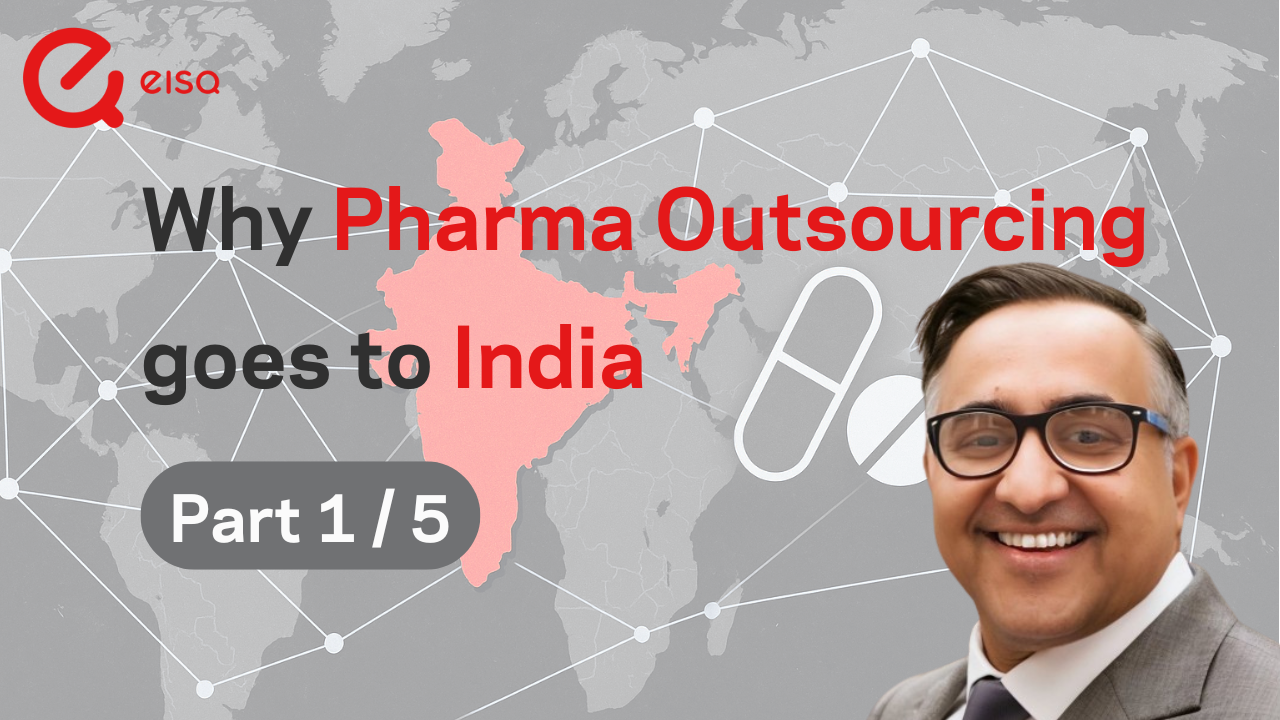
Teil 1, beleuchtet, warum Indien als „Apotheke der Welt“ gilt und wie das Land sich durch Skalierung, Ausbildung und strategisches Denken zu einem globalen Partner für Pharma Outsourcing und Lizenzmodelle entwickelt hat. Kuntal Chatterjee teilt Einblicke, was europäische Unternehmen aus Indiens Erfolg lernen können.

In Teil 2, unserer Gesprächsreihe „A Cup of Tea“ beleuchten Bernhard Gandolf und Kuntal Chatterjee die kulturellen, wissenschaftlichen und gesellschaftlichen Wurzeln von Indiens Erfolg im globalen Gesundheitswesen.
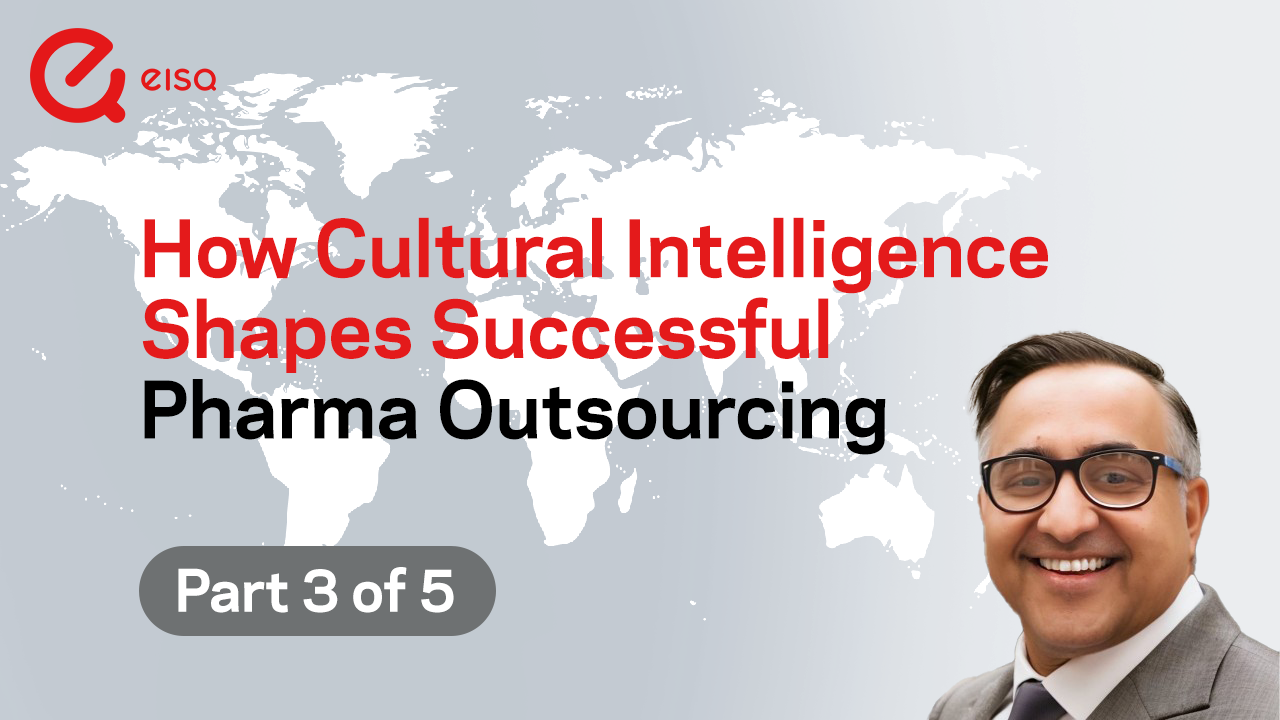
In Teil 3 spricht Kuntal Chatterjee darüber, wie Indien durch seine wissenschaftliche Stärke, Innovationskraft und ein tief verwurzeltes Mindset aus Vielfalt zu einem der wichtigsten globalen Partner für die Pharma- und Healthcare-Industrie wurde. Gleichzeitig zeigt er, warum Vertrauen im Outsourcing nicht nur über Regulierung entsteht, sondern über kulturelles Verständnis, langfristige Beziehungen und die Fähigkeit, unterschiedliche Perspektiven produktiv zu verbinden.
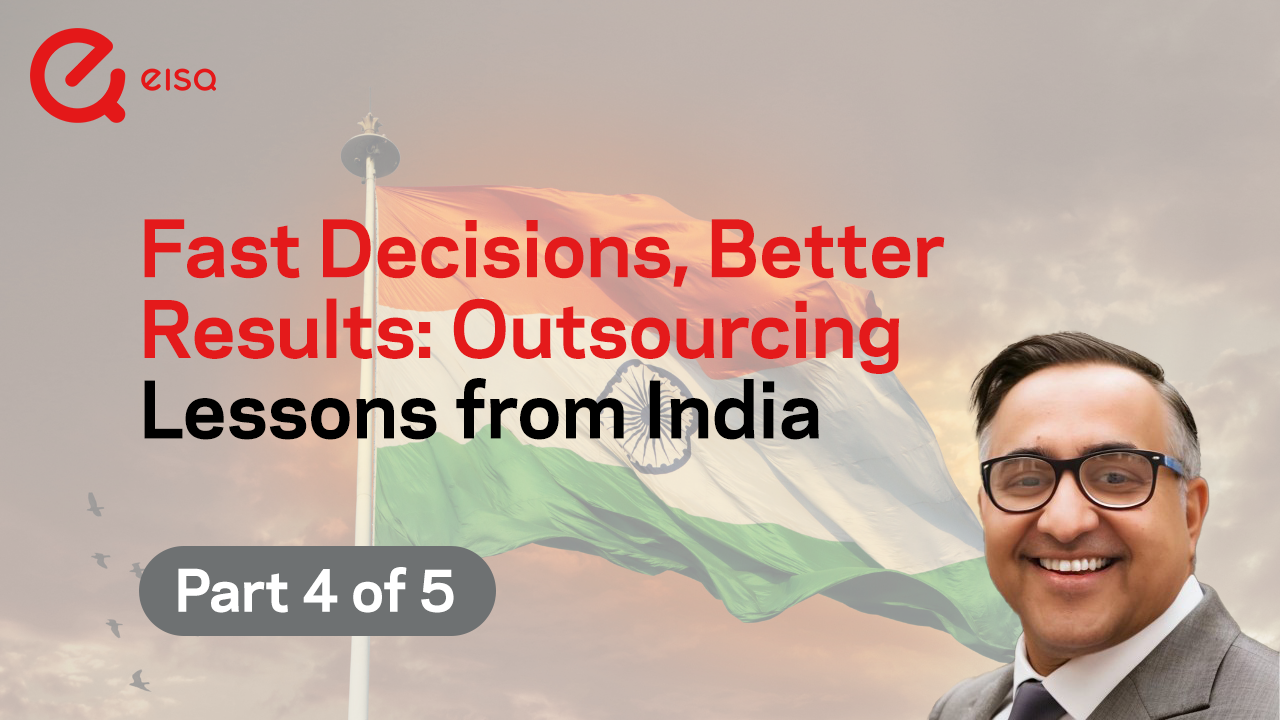
In Teil 4 erklärt Kuntal Chatterjee, worauf europäische und amerikanische Pharmaunternehmen achten sollten, wenn sie mit indischen Partnern zusammenarbeiten – insbesondere im Hinblick auf Kultur, Struktur und Projektführung.
Er betont, dass Checklisten, regelmäßige Follow-ups und die Offenheit für schnelle Veränderungen entscheidend sind und dass das beste Outsourcing-Modell entsteht, wenn westliche Detailtiefe und Fokus mit indischer Flexibilität und Geschwindigkeit kombiniert werden.
Erfahre, wie Unternehmen durch strategische Partnerwahl, klare Qualitätsstandards und gelebte Verantwortung ihre globale Pharma-Supply-Chain zukunftssicher gestalten von der Lizenzvergabe bis zur operativen Exzellenz.
Sprich uns unverbindlich und kostenfrei an – per Microsoft Teams oder direkt am Telefon unter +49 541 580543-0!
Wähle einfach den Termin, der dir am besten passt, und gib uns ein paar Stichworte zur Vorbereitung – den Rest übernehmen wir.
Mit unserer Erfahrung im internationalen Outsourcing und Qualitätsmanagement unterstützen wir dich praxisnah und effizient dabei, deine Partnerschaften mit Dienstleistern weltweit erfolgreich und zukunftsfähig aufzubauen.
Interesse geweckt?
Erfahre mehr über unsere Expertise im Outsourcing hier
Jetzt Termin sichern und dein Potenzial entdecken!
Sitzung abgelaufen
Bitte melde dich erneut an. Die Anmelde-Seite wird sich in einem neuen Tab öffnen. Nach dem Anmelden kannst du das Tab schließen und zu dieser Seite zurückkehren.